Linguana
Creator localization platform
Linguana translates and manages creator channels at scale. The motion worked — it just ran on people. Over five months we rebuilt qualification, outreach, follow-up, closing, and support as one engine drawing from a single operational brain, with humans kept exactly where judgment was actually needed.
The shape of the problem
Every part of the motion was known and none of it was written down. Qualification lived in one person's judgment, follow-up depended on who had the time, and the answer a customer got depended on who picked up the ticket. Nothing was broken enough to fix, and all of it was fragile enough to fail at volume.
What we built
Five engines, all reading from and writing back to the same operational source of truth.
Outbound agents
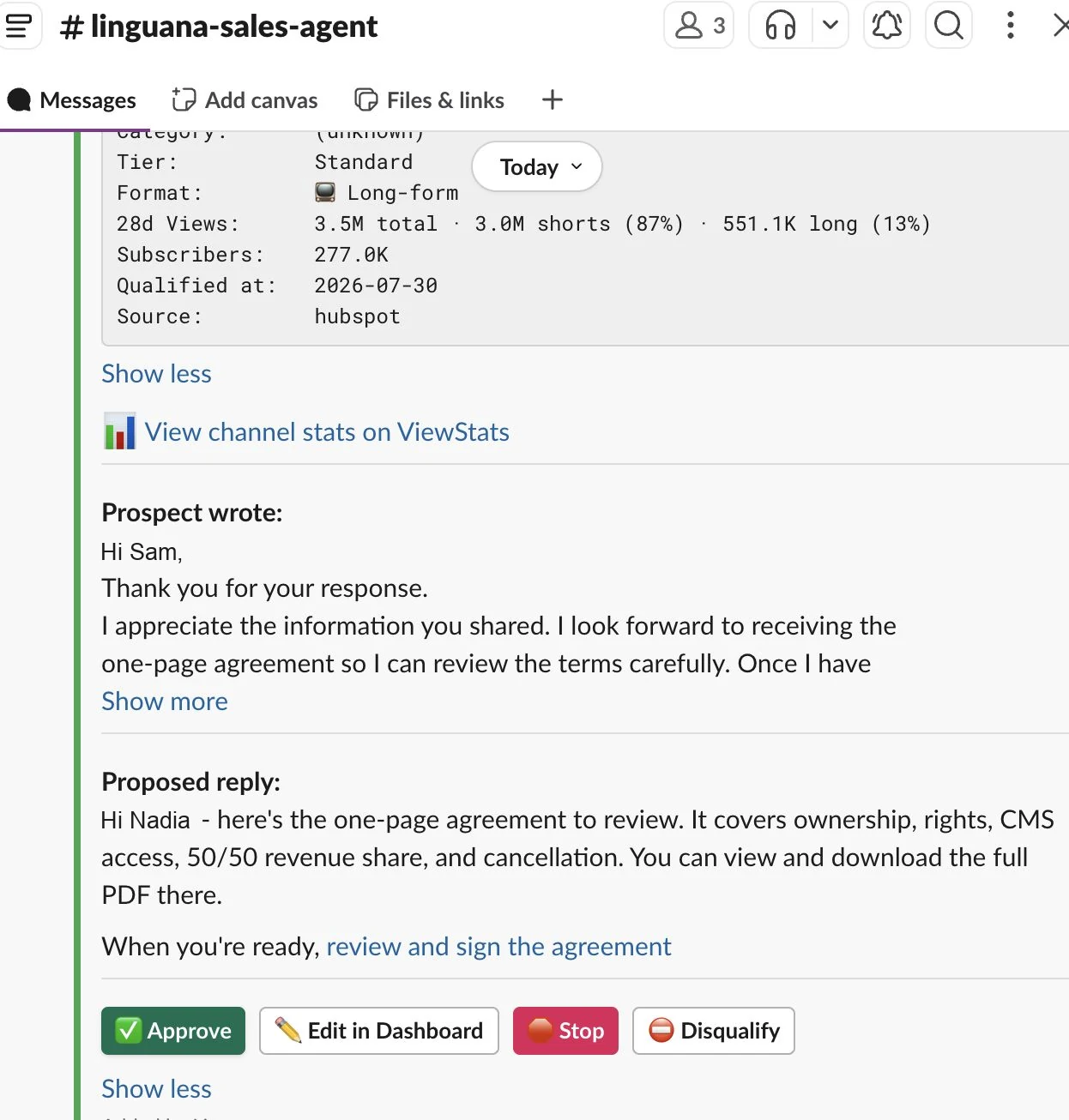
Volume outreach in your prospects' language and your team's personas. Sends alone where the stakes are low, waits for a human where they aren't.
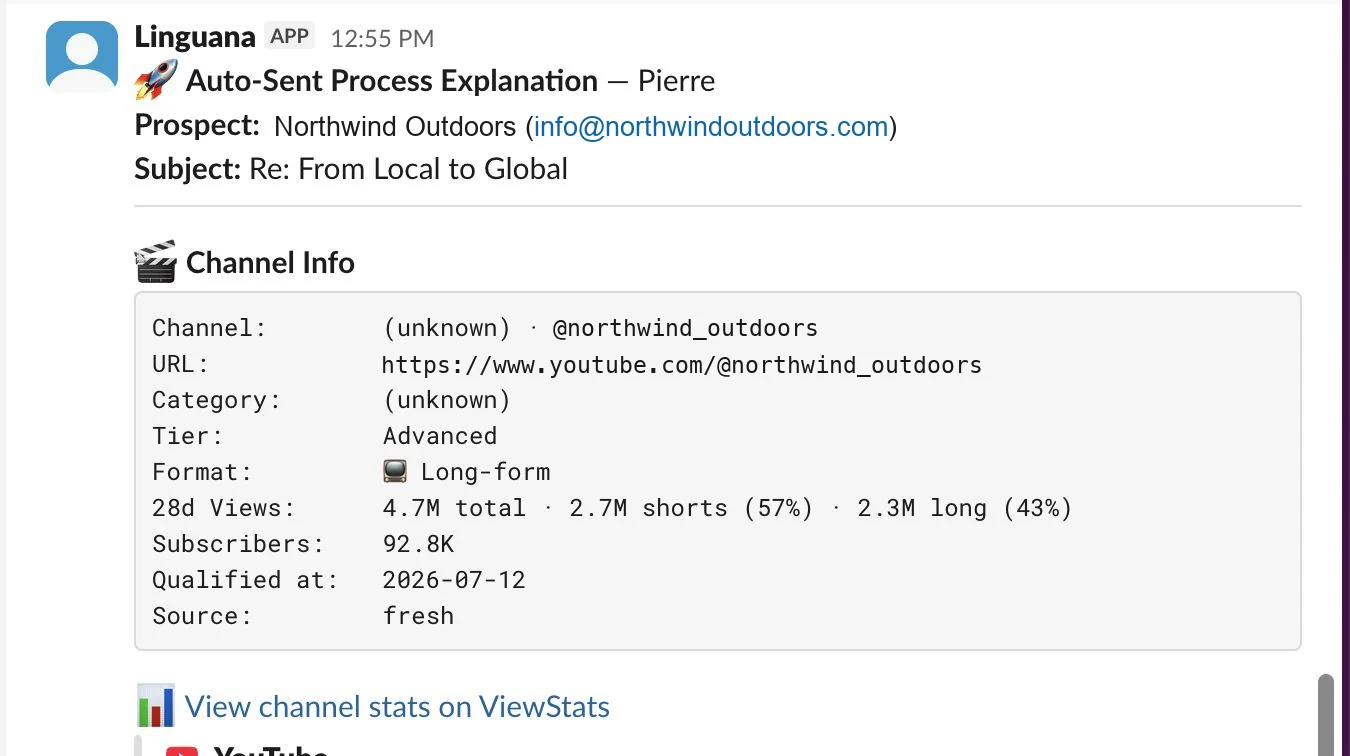
At Linguana this meant creator outreach in the creator's own language, with every autonomous send posted to Slack alongside the context the agent used to justify it.
Qualification
Every lead scored against your real thresholds before anyone spends effort on it.
Channels were scored against the thresholds the team already used informally — the difference was that the thresholds became explicit, versioned, and arguable.
Deal creation
Signed contract to CRM deal, with no manual data entry.
Signature to deal record to onboarding kickoff, with no one retyping a name between three systems.
Support agents
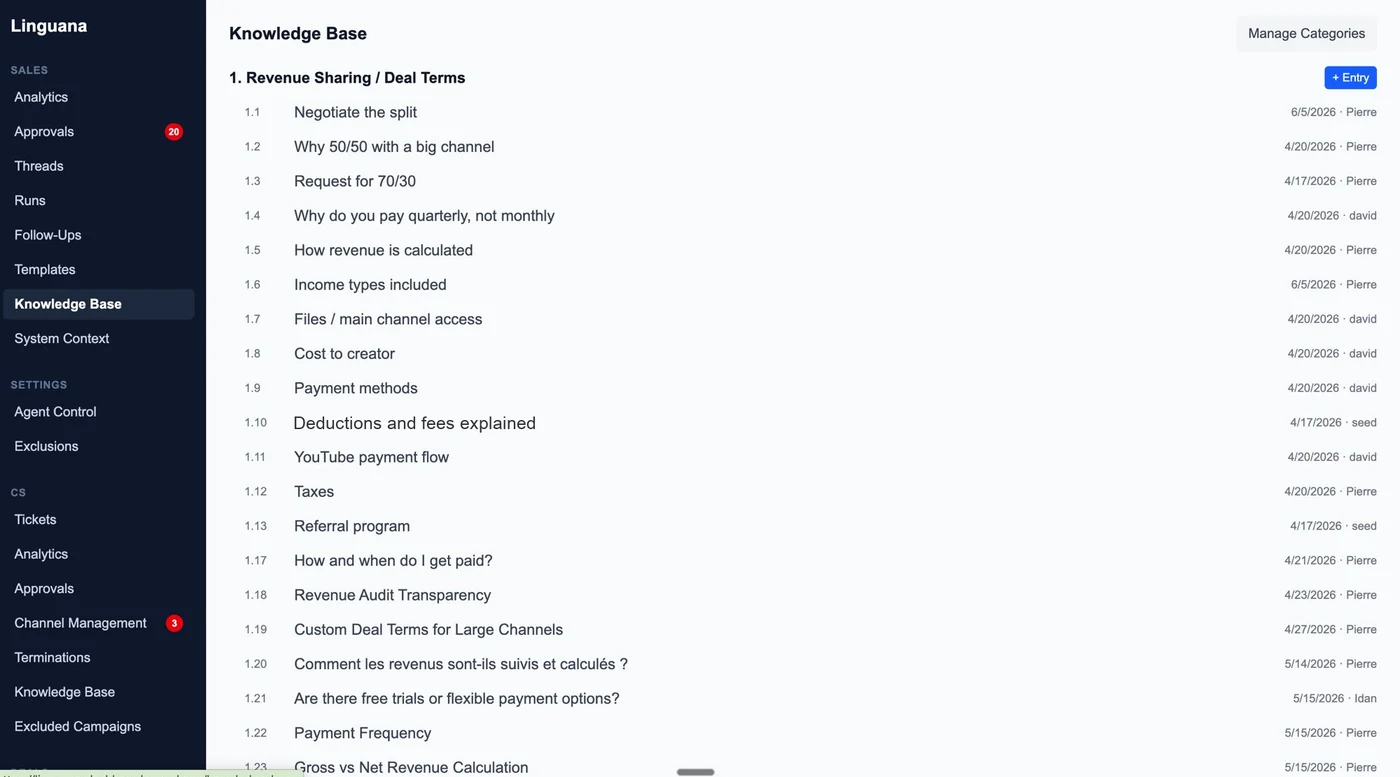
Customer questions answered from a knowledge base your team owns, edits and versions.
Every answer the agent can give is an entry in that base — dated, attributed, and editable by the person who actually knows the answer.
Dashboards
One place to approve, act, and see the real state of the pipeline.
Agent sends and human sends counted separately in the same row, because the split is the whole argument.
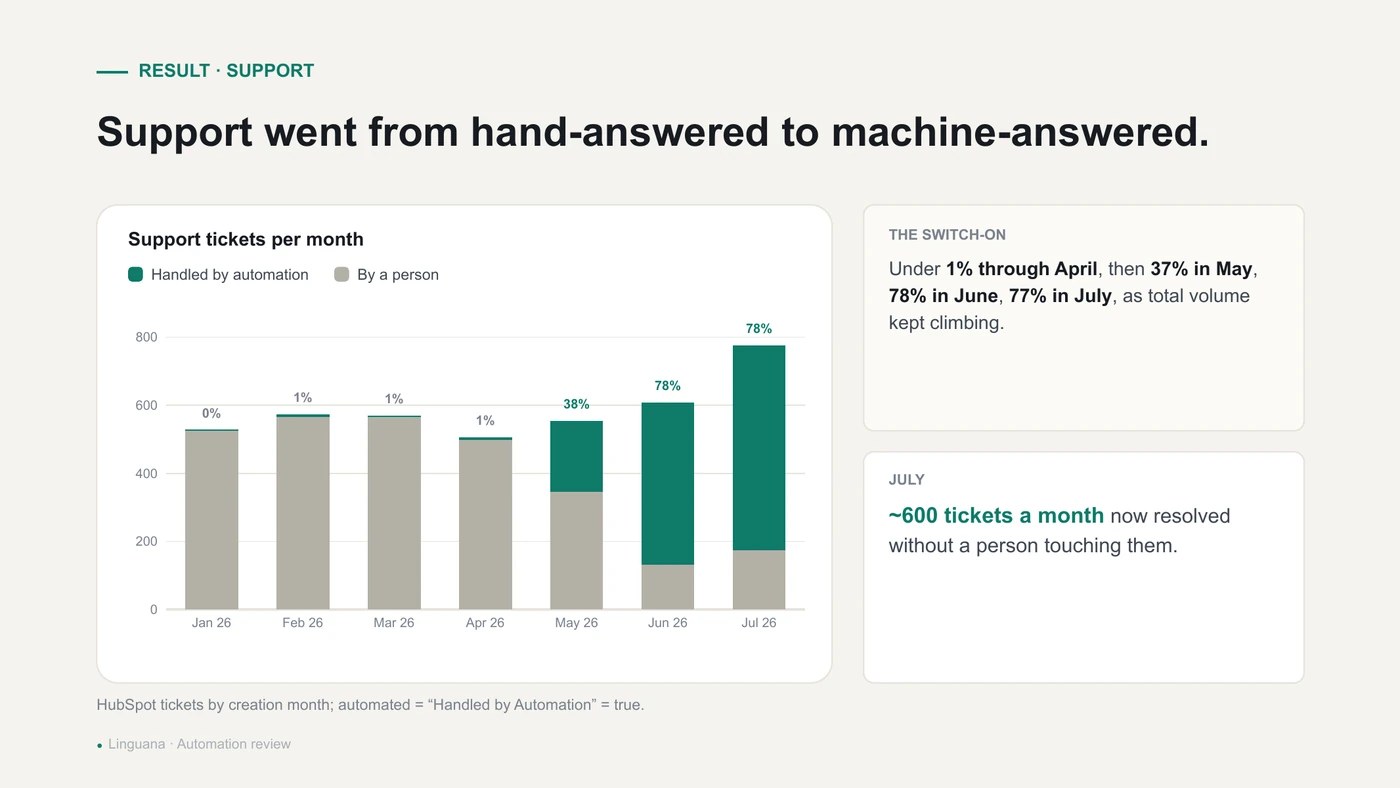
What it produced
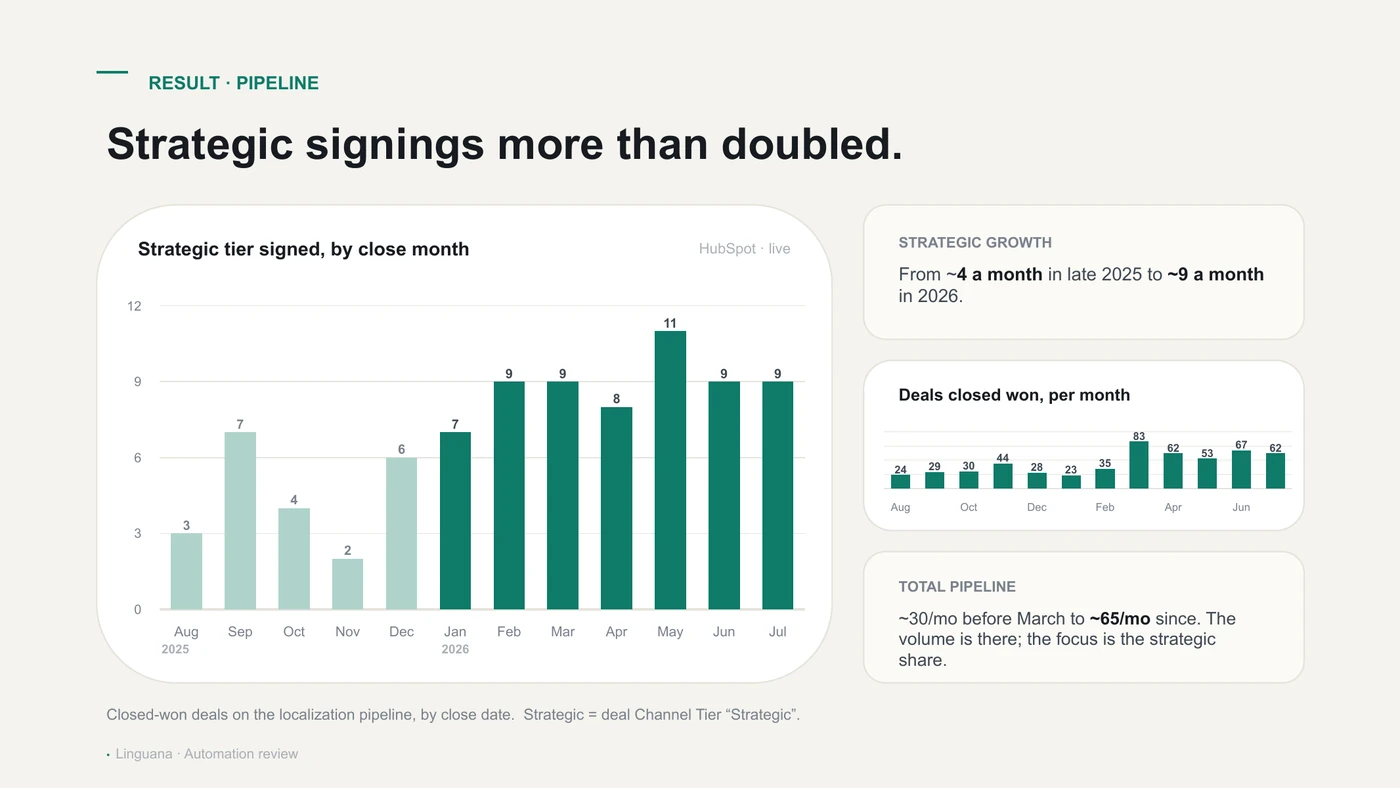
“We were at a conference all week — and the agent just kept closing deals without us. That's when it stopped being a pitch and started being real.” David · Linguana
The next challenge
With volume solved, the question changed. Signing more creators is easy to measure and easy to optimize — but once the pipeline was full, what mattered was which cohorts actually earned, not which signed fastest. Volume had stopped being the constraint. Quality was the next one.
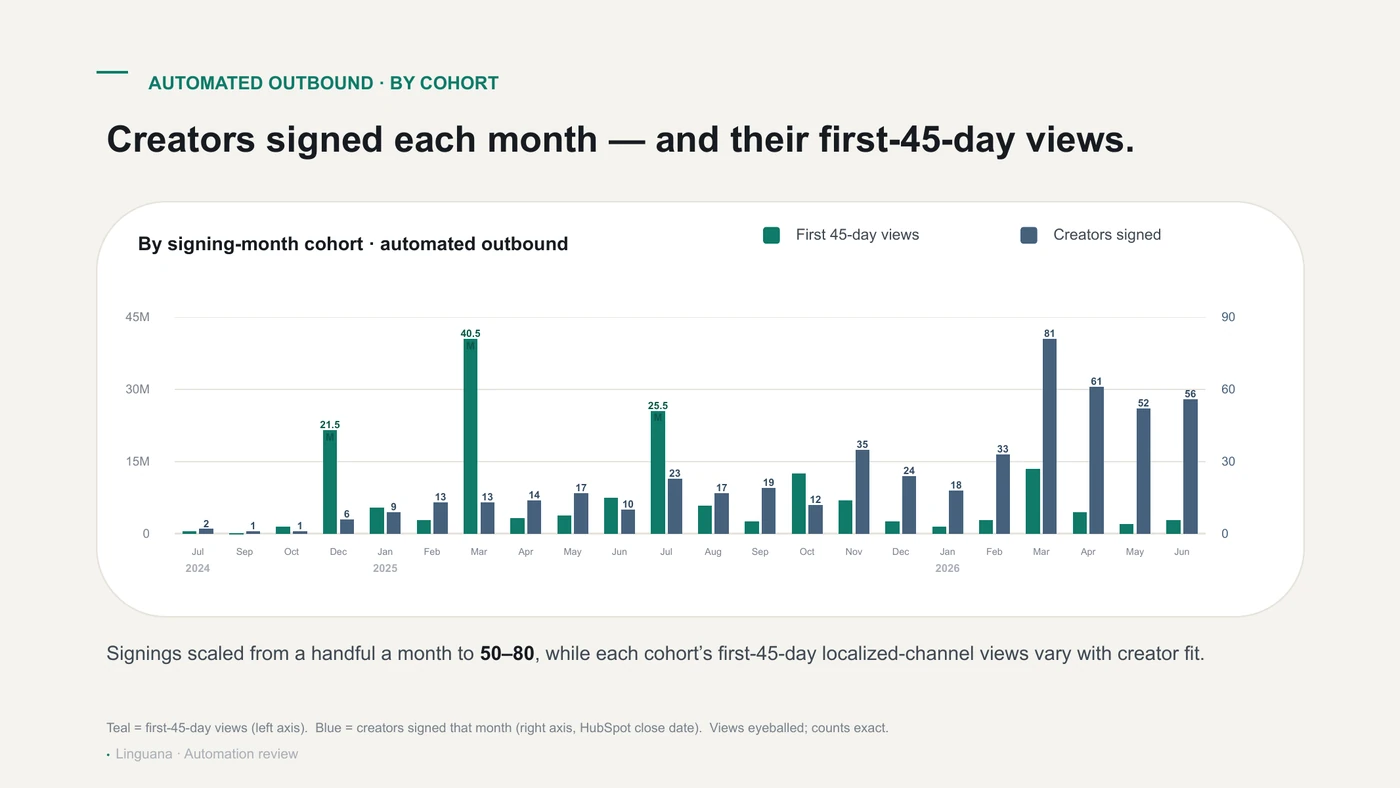
So we pointed the same machine at quality — same architecture, different thresholds. That shift is the argument for building the layer in the first place: when the target changed, we changed one source of truth, and both the people and the agents inherited it.
Let's find your engine
Book a discovery call. Bring your messiest workflow — we'll tell you exactly what we'd build.
Book a discovery call